


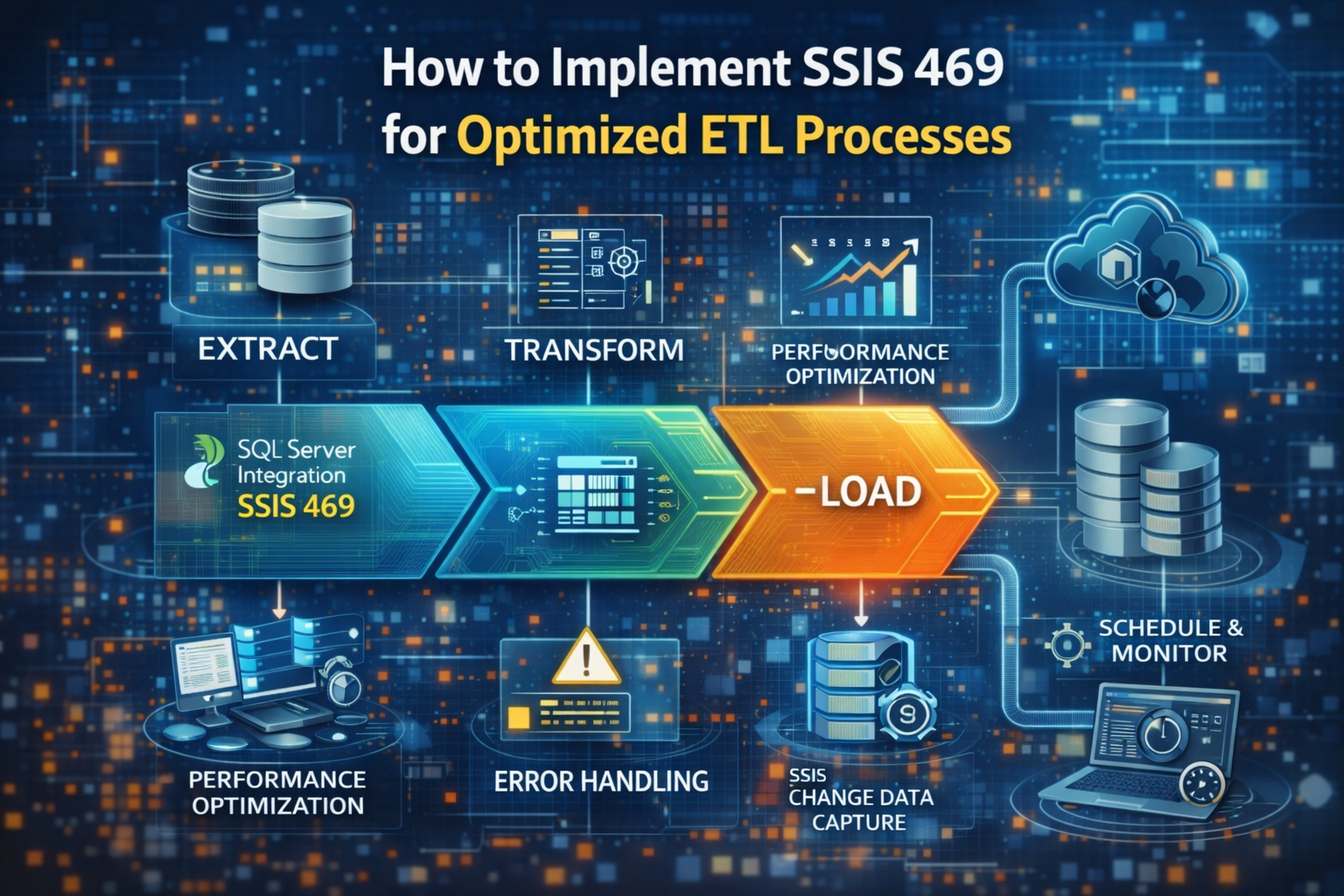
ETL (Extract, Transform, Load) in the contemporary data realm is necessary in the management of massive amounts of data. SQL server integration services (SSIS), especially SSIS 469, is one of the tools that have been identified to be effective in the optimization of ETL processes. SSIS 469 is an excellent tool that integrates, transforms, and loads data, thus it is a solution of choice in companies with complicated data systems.
In this paper, we will discuss ways of using SSIS 469 to streamline your ETLs, improve on system performance, and make those data pipelines as efficient as they can be.
What Is SSIS 469?
The SSIS 469 is a type of SQL Server Integration services (SSIS) that offers new features and enhancements to the older versions. SSIS can be described as a data integration, transformation and loading platform. The 469 release has more performance improvements, error handling and flexibility when handling data of multiple sources.
SSIS 469 also allows the data professionals to perform faster and more reliable data transfers besides providing them with enhanced error management allowing them to streamline their ETL processes successfully.
The Essentials of SSIS 469 to Optimal ETL Processes.
To learn the rationale behind the importance of SSIS 469 to the optimization of ETL operations, we will consider the following key advantages of the tool:
- Scalability and High Performance.
SSIS 469 will be able to process large amounts of data effectively, which is why it is the best choice to use with businesses with complicated ETL requirements. It is capable of parallel processing, batch loading and state-of-the-art data transformation methods and is highly performant even when handling large data warehouses.
2. Error Control and Checking Facilities.
Malfunctions in data can have an extreme effect on the ETL process because it may cause delays or wrong data loading. SSIS 469 enhances the error control process by giving a more detailed control of error control. It enables users to define their own error-handling functions, so the problem with the data is detected and a solution provided without slowing down the whole process.
3. Flexibility in Data transformation.
The possibility to make complex data transformations is one of the strongest aspects of SSIS 469. No matter what you are required to clean, merge or reshape data, SSIS offers a plethora of transformation tasks, which can be tailored to your requirements. The transformations are critical to the preparing of raw data ready to be analyzed, reported and business intelligence.
4. Good Inter-integration with other sources of data.
The data in the modern business are stored in various structures and forms. The SSIS 469 has connectors and tasks that allow it to be easily integrated with different types of data sources, such as databases, flat files, XML, Excel and cloud providers, such as Azure and AWS. It is easier to add information across environments to your ETL processes.
5. Cost Efficiency
SSIS 469 has the potential to dramatically decrease the cost of running data pipelines by enhancing ETL automation and decreasing human involvement. It also assists businesses to utilize the resources that they have in the best way possible by offering real time monitoring and performance tuning hence, making sure that the system is working at its most efficient level.
Getting Started with SSIS 469 to achieve SSIS 469 with optimization ETL process.
Having discussed the advantages of SSIS 469, we are now going to take a closer look at the step-by-step procedure of its implementation that will allow optimizing your workflows in ETL.
Installation:
SQL Server Data Tools (SSDT): This is a toolkit used to develop SQL Server database objects, and the installation procedure is straightforward.<|human|>
Step 1:
SQL Server Data Tools (SSDT) installation SQL Server Data Tools (SSDT) is an assortment of tools to create SQL Server database objects, and the installation process is not complex.
To begin creating the SSIS packages, you must first install SQL Server Data tools (SSDT) that gives you a platform to develop, administer, and deploy your SSIS packages.
- Install SQL Server Data tools on the official Microsoft site.
2. Make sure that you install a compatible version of SQL server (SQL Server 2019 or above is suggested with SSIS 469).
Step 2: New SSIS Project.
This is because after you have installed SSDT, you may start to create your SSIS project:
- Visual Studio Open and set up a new Integration services Project.
- Name your project and establish the location of storage.
- The project will be made up of SSIS packages, which comprise of all the tasks and data flow elements required in ETL activities.
Step 3: Data Flow Tasks Configurements.
The Data Flow Task is the core of any ETL process in SSIS as data is extracted, transformed and loaded there. The following is the way you can configure your data flow:
- Extract Data: The Source Component (such as SQL Server Source, Flat File Source, etc.) will extract data in your selected source of data.
- Transform Data: The Transformation Components (such as Data Conversion, Derived Column, Merge Join etc.) are used to transform the data as required. Here the transformational abilities of SSIS 469 become useful.
- Load Data: The Destination Component (such as SQL Server Destination, Flat File Destination, etc.) is used to load transformed data into your target system or data warehouse.
Step 4: Instal Error Adjustment and Logging.
The ability to deal with errors is one of the most important issues about an ETL process. SSIS 469 offers more error handling possibilities, thus you can specify how your workflow deals with errors in various areas:
- Error Outputs: Each data flow component can be defined about what should happen on the occurrence of an error. You have the option of redirecting the failed rows to a different place, recording an error or even proceed to process with default settings.
- Event Handlers: using event handlers, you track the failures in your packages and keep a log. This will assist you to monitor problems which can be encountered in the process of ETL.
Step 5: Optimize Performance
In order to ensure that SSIS 469 works well, these are the best practices to use to make sure it works efficiently:
- Use Buffering: SSIS operates using memory buffers and increasing the buffering size can enhance its performance particularly when the data is huge.
- Parallel Processing: Have the option of parallel processing more than one data stream to maximize the use of multi-core processors.
- Limit Blocking Transformations: Data flow can be blocked by such transformations as Sort, Merge and Aggregate, and slows down processing. In as far as possible, these transformations are to be avoided or applied sparingly.
Step 6: Timetable and Monitor your SSIS package.
After completing your SSIS package and making it optimized, you must schedule and monitor the package. Here’s how:
- Deploy Your SSIS Package: Deploy SSIS package to SQL Server Integration services server or Azure data factory server to execute it online.
- Schedule the Package: Schedule the ETL jobs by use of SQL server agent or Azure data factory. It will make sure that your ETL processes will be timely and consistent.
- Monitor Execution: This is the step to monitor your packages running on the SQL server or on the Azure Monitoring Tools (SSISDB). This gives you the ability to monitor the performance, debug the mistakes and optimize the workflow.
Best Practices of GAAP Accounting 722 ETL Processes.
When deploying SSIS 469, the following are the best practices that can be used to streamline your ETL processes:
- Modularize Packages
- Decompose complicated ETL processes into packages that are easy to manage. This method facilitates ease of maintaining, debugging and optimization of your processes.
- Take Advantage of Change Data Capture (CDC).
- When you have huge data to work with, then you may want to use Change Data Capture (CDC) to load only new or modified data. This has the advantage of lowering the load on the processors and enhancing performance.
Test Data flow debugging tools.
The SSIS 469 offers debugging options that enable you to go through the process of data flow. This is one way of locating performance bottlenecks and errors that might not be obvious.
Automate ETL Testing
Test automated Testing tools in order to verify your ETL processes. This would provide the accuracy and consistency of data throughout your workflows.
Conclusion
Using SSIS 469 to host optimized ETL processes can greatly benefit your data integration processes as well as minimize the human factor and make the whole process more efficient. With the guidelines provided in this paper, you can configure SSIS 469 in order to automate tedious data operations and enhance the speed and dependability of your ETL operations.
When you proceed using the SSIS 469, take into account the need to optimize performance, introduce an effective error management method and provide scalability. Having these best practices in mind, you will be able to harness the potentials of SSIS 469 and put your data management to the next level.