


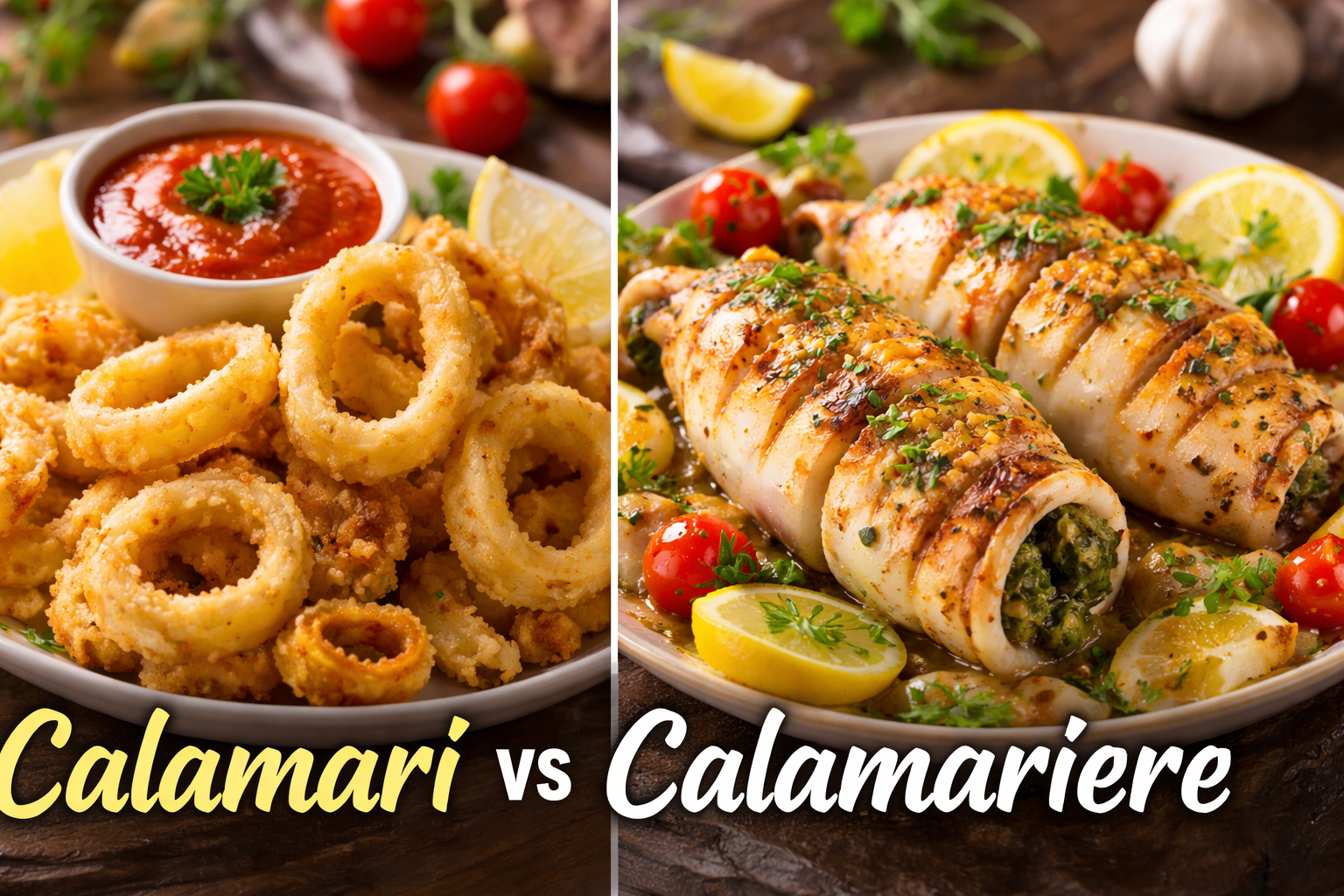
Worldwide seafood admirers frequently encounter two terms that have a close pronunciation calamari and calamariere. On the face of it, these two might appear to be exactly the same as they both refer to tasty squid-based meals that are usually offered in the restaurants and seafood markets of the Mediterranean region. Nevertheless, digging deeper into the culinary traditions and contemporary gastronomy, one starts noticing slight distinctions.
Although there is a popular dish called calamari which is generally known as crispy fried rings of squid, calamariere is becoming more popular in the form of a widely expanded and sophisticated version of squid dishes. It is more than a recipe but a style of preparing squid with innovativeness, culture and culinary expertise.
This paper will cover the main differences between the calamari and calamariere and their origins, cooking process, flavor, nutritional content, and the place of each dish in the global seafood culture.
All about Calamari: The Traditional Squid Dish.
Calamari is considered to be one of the best-known seafood appetizers in the world. The calamari word is of Italian origin and merely translates to squid. Calamari in the majority of restaurants is squid rings that are battered and fried to a golden and crispy crunch.
Common Features of Calamari
- It is usually prepared in the form of fried rings of squid.
- Frequently covered with light flour or batter.
- Fried with lemon wedges or lemon aioli, or marinara sauce.
- An appetizer in Mediterranean and American foods and popular.
The dish was a huge success in the United States and Europe in the late 20 th century and made it to seafood menus. Its crispy outer and soft inner parts make it attractive even to those who have just learned how to eat seafood.
People also value calamari due to its simplicity. It is also not centered on decorated ingredients or methods, but rather on the squid itself.
What Is Calamariere?
Calamariere does not focus on a single type of cooking, as calamari does. Rather it is a more refined and expanded culinary style which involves squid.
Calamariere usually means the squid which is cooked with the artistic presentation and sophisticated tastes and the local cuisine. It may involve grilled squid, stewed squid dishes, stuffed squid and new fusion versions.
The word is used in an artisanal manner in lots of food circles in the same way as such words as patisserie or chocolatier. It implies skillfulness and precision in the cooking of seafood.
The important Features of Calamariere.
- Specializes in smoked squid dishes.
- Cooks using different techniques.
- Frequently under the influence of the Mediterranean cuisine.
- Contained within are contemporary modern interpretations.
Calamariere is not an individual recipe, but a culinary concept that glorifies the use of squid as a diverse ingredient.
The critical Disagreements between Calamari and Calamariere.
Despite the fact that both of the dishes are based on squid, there are a few key differences between them.
Type Calamari Calamariere
- Sense Squid, fried generally A sophisticated form of squid food.
- Cooking In the majority of cases fried.
- Culinary Style Strauss and simplistic Creative and artisanal.
- Presentation Small snack or bar snack Small snack or bar snack- Chef-driven or gourmet.
- Cultural Background Trendy globally Based on Mediterranean cultures.
Simply speaking, calamari is a traditional dish, and calamariere is a more developed cuisine that deals with squid-based dishes.
Cooking Techniques: The Preparation of Each Dish.
The traditional recipe of Calamari.
The frying is the most popular method of cooking calamari. The squid is cut into rings after which it is covered with seasoned flour or batter and is fried at a high rate.
Key steps include:
- Fresh squid is to be cleaned and sliced.
- Rubbing rings with flour, salt and pepper.
- Frying in hot oil for 1-2 minutes
- Introducing at the same time with dipping sauces.
Squid is cooked very quickly so that it does not become rubbery.
How Calamariere Is Prepared
Calamariere applies more methods of cooking. Chefs are known to do experiments in flavors, texture and presentation.
Popular methods include:
Grill, Squid in olive oil, lemon and herbs.
Stewing: Squid that is cooked slowly in tomatoes and wine sauce.
Stuffing: Whole squid stuffed with rice, herbs or seafood mixtures.
Squid baked with vegetables and spices.
Such techniques produce more complicated flavour profiles and more elaborate textures than traditional calamari.
Global Culinary Influences
Squid has been included in coastal cuisines over the centuries especially in areas where fishing is a way of life. Both calamari and calamariere are reminiscent of these traditions.
Mediterranean Influence
The Mediterranean nations, Italy, Spain, and Greece have always been enjoying the squid dishes. Squid is commonly grilled in such areas using olive oil, garlic and fresh herbs.
The cooking style has a significant impact on the idea of calamariere, in which fresh products and the use of basic methods is used to showcase the natural taste of seafood.
Asian Interpretations
Squid dishes adopt spices and bold flavors in Asia. Some of them are prepared by street food sellers boiling squid on charcoal and dipping into soy-based glazes or hot sauces.
All these influences around the world have encouraged the current chefs to make fusion-style dishes of calamariere which are a mixture of the tradition of the Mediterranean and the Asian taste.
American Seafood Culture
Calamari was a fashionable restaurant appetizer in the United States in the 1980s and 1990s. In most of the modern restaurants, squid is now tested in taco, pasta and seafood plateaus.
These innovative meals are well aligned with the calamariere concept, innovation is one of the dominant factors.
Flavors and Texture Ingrained.
The texture of the dishes, which makes squid taste impressive and allows absorbing of flavors, is one of the reasons why this dish is so popular.
Calamari Flavor Profile
Calamari is generally light and somewhat sweet seafood. Crispy batter is used to give the dish a crunchy bite and dipping sauces give it an acidic bite or a rich bite.
The general impression is easy, content, and friendly.
Calamariere Flavor Profile
The calamariere dishes tend to emphasize stratified tastes and cuisine ingenuity.
Based on how it is prepared, calamariere can include:
- Garlic and herb marinades
- Tomato and wine reductions
- Citrus-based sauces
- Exotic spice blends
Such ingredients transform squid into a main dish of seafood.
Nutritional Members of the Squid Dishes.
Calamari and calamariere are both nutritious foods.
Squid is naturally:
- High in protein
- Low in calories
- Rich in vitamin B12
- A source of selenium and fatty acids (Omega-3).
Approximately, 100 grams of squid yield the following quantities:
- 90-100 calories
- 15 grams of protein
- Minerals that are necessary and helpful to the immune and the brain.
Nevertheless, the nutritional value may differ according to the method of cooking. Fried calamari will have more fat, whereas the grilled or baked calamariere dishes are healthier.
How to Cook Perfect Squid at Home.
Whenever you are cooking calamari, or are trying one of the calamariere recipes, you will need to cook the recipes in a proper way.
Key Tips
1. New squid is to be used where feasible.
Fresh seafood performs the most useful taste and a texture.
2. Cook squid quickly or slowly
Squid turns out to be hard when cooked in an intermediate duration. Either prepare it in a short time (1-2 minutes) or bake it in dishes.
3. Avoid overcrowding the pan
This guarantees uniform cooking, as well as crispness.
4. Use simple seasonings
The natural flavor of squid is added to by lemon, garlic, olive oil, and herbs.
The return of Modern Calamariere.
Over the past couple of years, culinarians have started redefining the squid dishes using new culinary measures. Gourmet restaurants are now served with squid accompanied by services like truffle oil, saffron sauces, or squid ink pasta.
Creative calamariere recipes may be made at food festivals and culinary events, which have turned simple seafood into works of art.
This trend has also been contributed by social media. The squid dishes are presented in a visual delight on food bloggers and chefs, which encourages home cooks to find new recipes and styles.
Consequently, calamariere is slowly turning out to be symbolic of contemporary seafood innovativeness.
Final Thoughts
Even though calamari and calamariere are based on the same food, they signify distinct cooking concepts.
Calamari is the traditional squid fried food that has gained popularity because of its simplicity and crispy taste. It is still among the most popular seafood appetizers in the world.
Calamariere however is a more advanced and more elaborate squid dish. It is open to creativity, different ways of cooking, and world cuisine.
All of these dishes can be discussed as the image of the versatility of squid and its adaptation to other cultures, tastes, and cooking methods.
Squid will always have a place of honor in the world of seafood whether in the form of crispy calamari served in a seaside restaurant or the form of a sophisticated calamariere meal made by a professional cook.
FAQs
What is calamariere?
Calamariere is a sophisticated method of cooking squid dishes. It is usually done with innovative cooking methods and fancy presentation which is based on Mediterranean seafood elements.
Is calamari equivalent to calamariere?
No. Calamari normally means squid rings that are fried whereas calamariere is a wider culinary term that covers different forms of squid.
What is your recipe to cook squid and not to make it rubbery?
Squid can be cooked very fast (1-2 minutes) or cooked longer in the case of some longer dishes. Medium cooking times should also be avoided because they make the texture chewy.
Is squid healthy to eat?
Yes. Squid is an inexpensive, protein-rich food that contains some essential nutrients such as vitamin B12, selenium and omega-3 fatty acids.
Which are the good sauces to use with the squid dishes?
Some of the most popular ones are the marinara, lemon garlic aioli, sweet chili, and herb-infused olive oil. The squid is paired with these sauces to enhance its blandness.